
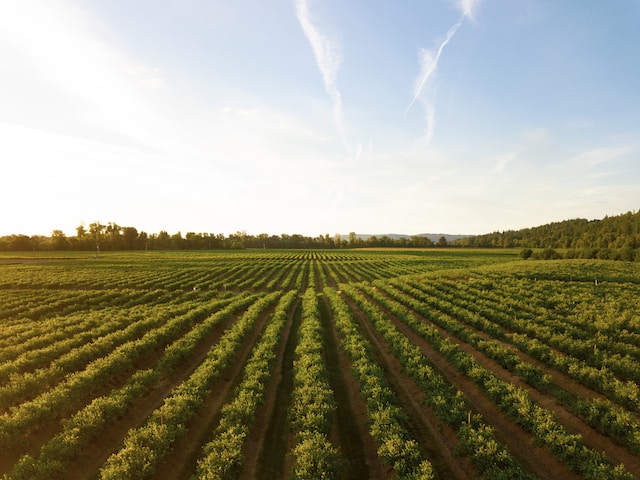

Regenerative agriculture aims to improve the natural systems that farming depends on. It focuses on healthier soil, better water movement, more plant diversity, and stronger farm resilience. The term does not describe one universal recipe. Instead, farmers combine practices that suit their soil, climate, crops, livestock, and business goals.
What regenerative agriculture means
Definitions vary across researchers, farmers, and organizations. Some define the idea through practices such as cover crops and reduced tillage. Others focus on outcomes such as improved soil function, biodiversity, or carbon storage. Therefore, clear claims should state both the practice used and the result measured.
The central idea is to treat soil as a living system. Healthy soil stores and moves water, cycles nutrients, supports roots, and provides habitat for many organisms. The US Natural Resources Conservation Service highlights four broad principles: keep living roots, reduce disturbance, maintain soil cover, and increase biodiversity.
Core regenerative agriculture practices
Cover crops. Farmers plant grasses, legumes, or other crops between cash-crop seasons. As a result, living roots feed soil organisms while plant cover limits erosion. The residue can also protect the surface from heat and heavy rain.
Diverse rotations. Changing crop families across seasons can interrupt pest cycles and widen the range of roots and residues entering the soil. In addition, diversity may spread production risk across crops.
Reduced tillage. Less intensive soil disturbance can protect structure and soil habitat. However, reduced tillage is not automatically suitable for every field. Farmers may need different weed, residue, and equipment strategies.
Managed grazing. Carefully planned livestock movement can recycle nutrients and support plant recovery. By contrast, excessive grazing can compact soil and reduce plant cover. Stocking rates and recovery time therefore matter.
Compost and nutrient management. Organic amendments may add carbon and nutrients. Yet application should match crop needs and local rules. Too much nutrient input can still pollute water or raise emissions.
Soil, water, and biodiversity benefits
Soil cover and stable aggregates can reduce erosion. Meanwhile, roots and organic matter may improve water infiltration and storage. These changes can help crops handle dry periods, although outcomes depend on soil type, rainfall, and management history.
Greater plant diversity can also create habitat for insects, birds, and soil organisms. Consequently, farms may gain more ecological functions, such as pollination and nutrient cycling. Results vary, so farmers should track indicators rather than assume every practice works equally well.
The NRCS healthy-soils guidance links rotations, cover crops, nutrient management, and conservation tillage with soil structure, water retention, and nutrient cycling.
Climate potential and limits
Better soil management can store more carbon in some settings. It may also reduce fuel use, fertilizer losses, or erosion. However, soil carbon gains are not unlimited or permanent. Drought, fire, erosion, or a return to intensive disturbance can reverse part of the gain.
Measurement is another challenge. Soil carbon varies across short distances and depths, while sampling can be costly. Therefore, climate claims need suitable baselines, repeated measurement, and transparent methods. Avoided emissions and stored carbon should also be reported separately.
Regenerative farming can complement broader climate-change action, but it cannot replace rapid cuts in fossil-fuel emissions. Likewise, buyers of agricultural carbon credits should examine additionality, durability, leakage, and verification.
Farm economics and transition risks
New practices can require seed, equipment, advice, or extra management time. Yields may change during the transition. Furthermore, benefits such as better water retention may take several seasons to appear. Cash flow and local market access can therefore determine whether adoption is practical.
On the other hand, some farmers may save fuel, labor, or purchased inputs. Diverse crops and livestock can also create new revenue sources. The financial result depends on local prices, weather, soil, and the farmer’s starting system.
Support can reduce the risk. Demonstration farms, peer networks, extension services, and well-designed finance help farmers test changes gradually. Our overview of sustainable finance explains how capital and risk-sharing tools can support environmental projects.
How to measure progress
A farm should begin with a baseline. Useful measures may include ground cover, infiltration, aggregate stability, soil organic carbon, input use, yield, profit, and biodiversity indicators. Farmers should select measures that match their goals and collect them consistently.
Short-term observations matter too. For example, photo points, rainfall records, grazing logs, and field notes can reveal patterns before laboratory results arrive. Comparing treated and untreated areas may also improve decisions.
No single number proves success. Soil carbon can rise while profitability falls, or erosion may decline before carbon changes become measurable. A balanced scorecard therefore gives a more honest view.
The future of regenerative agriculture
Interest will continue to grow as food companies, lenders, governments, and farmers respond to climate and soil risks. Better measurement tools may improve evidence and reduce reporting costs. Still, credible programs must avoid vague labels and guaranteed-outcome claims.
Regenerative agriculture is most useful as a practical learning process. Farmers set clear goals, test suitable practices, measure results, and adapt. When claims remain specific and evidence-based, the approach can support healthier soil, more resilient farms, and stronger rural landscapes.