
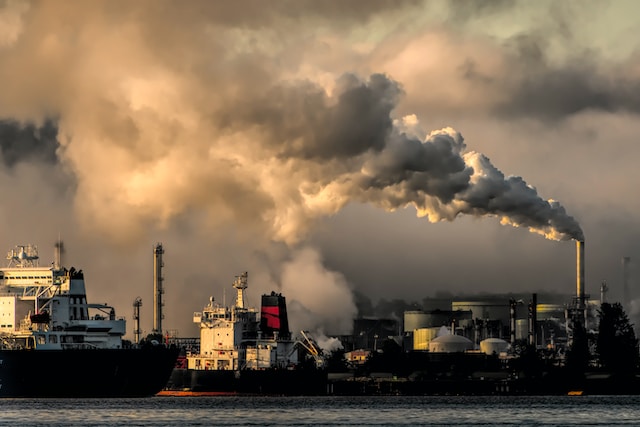

A lower carbon future needs policies that turn climate targets into measurable action. Carbon markets do this by assigning a price to greenhouse-gas emissions. Cap-and-trade is one important model. It sets an emissions limit while allowing regulated companies to trade allowances.

Carbon markets and a lower carbon future
A carbon market creates units that represent permission to emit or a verified reduction in emissions. However, not every market works in the same way. Compliance markets operate under law, while voluntary markets serve organizations that choose to buy credits. This article focuses mainly on regulated emissions trading systems.
The World Bank explains that the two main forms of direct carbon pricing are emissions trading systems and carbon taxes. A tax fixes the price of emissions. By contrast, an emissions trading system controls the quantity covered by its rules and lets trading help determine the price.
How cap-and-trade works
First, a government defines which gases, sectors, and facilities the program covers. It then sets a cap on total permitted emissions. Next, the regulator issues allowances that add up to that cap. Each allowance usually represents one tonne of carbon dioxide equivalent, although program rules vary.
Covered companies must measure and report their emissions. At the end of a compliance period, each company surrenders enough allowances to match those emissions. A firm that cuts pollution below its allowance holding can sell the surplus. Meanwhile, a firm that exceeds its holding must buy more allowances or reduce emissions.
Over time, regulators can tighten the cap. As a result, the total supply of allowances falls and the system supports a lower carbon future. The International Carbon Action Partnership provides a useful official overview of this process and the institutions needed to operate it.
Allowances, credits, and offsets
These terms often appear together, but they are not identical. An allowance belongs to a capped system and permits a covered source to emit a defined amount. A carbon credit usually represents a reduction or removal achieved by a project or activity. An offset is a credit used to compensate for emissions elsewhere.
Good accounting therefore matters. Programs need clear baselines, reliable monitoring, independent verification, and rules against double counting. Without these safeguards, buyers may pay for reductions that are overstated or would have happened anyway. Our guide to carbon exchanges and marketplaces explains where these units may be traded.
Why carbon pricing can lower emissions
A carbon price changes business decisions. When pollution carries a cost, efficiency upgrades and cleaner technology become more attractive. Companies can choose the least expensive path first. Therefore, the market can reduce emissions while giving firms flexibility over timing and methods.
Trading also creates a common price signal across covered businesses. That signal can guide investment in renewable power, industrial efficiency, cleaner fuels, and new processes. In addition, allowance auctions can raise public revenue. Governments may use that money for climate programs, household support, or industrial transition.
Carbon markets also connect with wider climate-finance strategies. However, a market is only one policy tool. Standards, public investment, research support, and social protections may still be necessary.
Risks on the path to a lower carbon future
Poor design can weaken results. If the cap is too generous, allowances become abundant and prices may fall. If rules change without warning, businesses may delay long-term investment. Market manipulation, weak oversight, and inaccurate emissions data can also damage trust.
Free allowance allocation creates another challenge. It can protect trade-exposed industries during a transition, but excessive allocation may reduce incentives or create windfall gains. Likewise, unrestricted use of low-quality offsets can allow covered firms to postpone direct cuts.
Policymakers must also consider fairness. Higher energy costs can affect low-income households more severely. Therefore, governments should pair carbon pricing with targeted support, transparent revenue use, and measures that help workers and regions adjust.
What makes an emissions market credible?
A credible system begins with an ambitious and declining cap. It also requires accurate measurement, reporting, and verification. Clear penalties encourage compliance, while independent oversight protects market integrity. Furthermore, transparent data helps citizens and investors judge progress.
Price-stability tools can reduce extreme volatility. For example, some programs use price floors, allowance reserves, or limits on banking and borrowing. Linking separate systems may increase liquidity, but only when their rules and environmental standards are compatible.
Finally, policymakers should review outcomes and adjust the design when evidence changes. A durable system balances predictable rules with the ability to correct weaknesses.
Building a lower carbon future
Cap-and-trade can translate an emissions goal into a firm limit and a tradable price signal. Its strength comes from the cap, not from trading alone. Consequently, environmental ambition depends on coverage, enforcement, and how quickly the limit declines.
Well-designed carbon markets can support innovation and direct capital toward cleaner choices. Yet they cannot replace every other climate policy. A lower carbon future will require credible markets alongside regulation, public investment, technology, and fair transition measures.




[…] Carbon Markets & Cap-and-Trade: Cutting Emissions for a Sustainable Future […]