


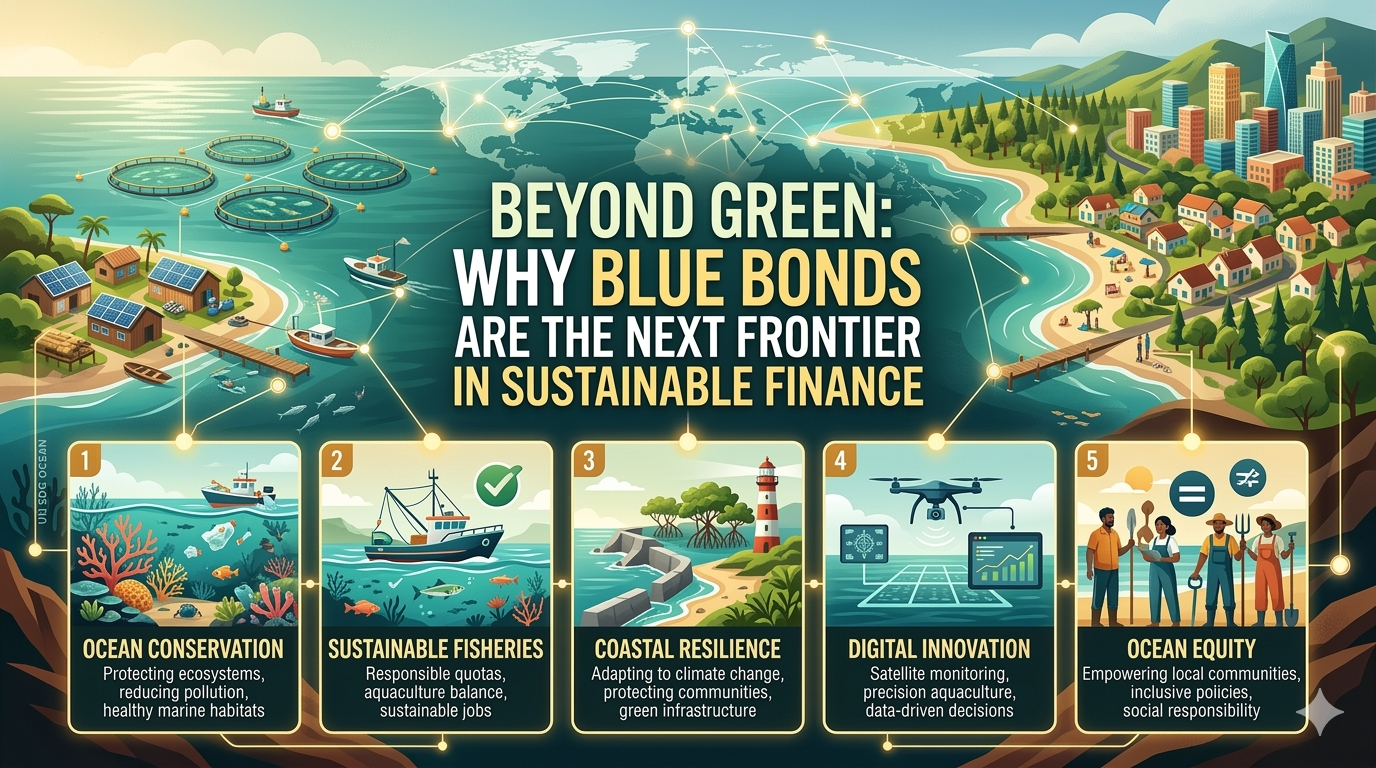
Blue bonds raise money for clean seas, healthy coasts, and safer ocean use. Like standard bonds, they let an issuer borrow from investors. However, the issuer must use the funds for agreed ocean projects.
That simple idea can link large pools of capital with urgent marine needs. It can fund cleaner water, stronger coastal defences, and better fisheries. Yet a blue label alone doesn’t prove that a bond will help the ocean.
What are blue bonds?
Blue bonds are debt tools with a clear use of proceeds. Governments, banks, or companies issue them and pay interest to investors. The money then supports projects tied to oceans, coasts, or fresh water.
They form part of the wider sustainable debt market. In fact, their basic design is close to green bonds. The main difference is the focus on water and marine systems.
What can blue bonds finance?
A strong bond framework lists eligible projects before funds are raised. It also explains how the issuer will select, track, and report each project. Common uses include:
- sustainable fishing and seafood supply chains;
- marine parks and habitat repair;
- wastewater treatment and cleaner rivers;
- plastic waste prevention and recycling;
- coastal protection and climate resilience; and
- clean shipping and low-impact ports.
Still, each project needs clear limits. For example, a port upgrade may cut fuel use but harm a nearby habitat. The framework should explain how the issuer will avoid such trade-offs.
How blue bonds work
1. The issuer sets a framework
First, the issuer defines its ocean goals and eligible spending. It should also state which projects are banned. Clear rules help investors judge whether the bond fits their aims.
2. Investors provide capital
Next, investors buy the bond. The issuer receives the funds and promises regular interest plus repayment. Credit risk still depends on the issuer, not on the success of one marine project.
3. Funds are tracked and reported
After issuance, the borrower tracks how it uses the money. Good reports cover both spending and results. They may show restored habitat, cleaner water, or fishing areas under better management.
The Seychelles blue bond example
Seychelles showed how the model can work at a national level. In 2018, it launched the world’s first sovereign blue bond. The issue raised US$15 million for marine protection and sustainable fisheries, according to the World Bank.
The structure mixed public support with private investment. As a result, it helped direct capital towards local grants and loans. It also gave other coastal states a useful model to study.
Why blue bonds matter
Ocean projects often need long-term funding. However, many coastal states face high debt costs and tight public budgets. These barriers form part of the wider climate finance gap in emerging markets.
Blue bonds can bring new investors into this space. They also create a reason to set targets and publish results. In turn, better reporting can make future projects easier to fund.
The risks investors should check
The biggest risk is “bluewashing.” An issuer may use an ocean label while funding weak or vague projects. Therefore, investors should look beyond the bond’s name.
- Check the use of proceeds. The framework should name clear project types and exclusions.
- Review the baseline. A target has little value without a clear starting point.
- Look for outside review. Independent checks can test whether the plan follows accepted rules.
- Read the impact report. Spending data alone doesn’t show better ocean health.
- Assess credit risk. A strong purpose doesn’t remove the risk of default.
How issuers can build trust
Issuers should publish simple goals, project rules, and yearly results. They should explain both gains and setbacks. Meanwhile, local groups should have a voice when projects affect jobs, access, or coastal land.
Good data also matters. Measures should show real change, not just money spent. For instance, reports can track water quality, fish stocks, flood risk, and habitat health.
The bottom line
Blue bonds can turn ocean goals into funded plans. They give borrowers a path to raise capital and give investors a clear theme. Even so, the label works only when rules and reports are strong.
Before investing, check the projects, the evidence, and the credit risk. When those pieces align, blue bonds can support healthier seas and more resilient coastal economies.




[…] Blue Bonds Explained: How Ocean Finance Works […]
[…] Blue Bonds Explained: How Ocean Finance Works […]