
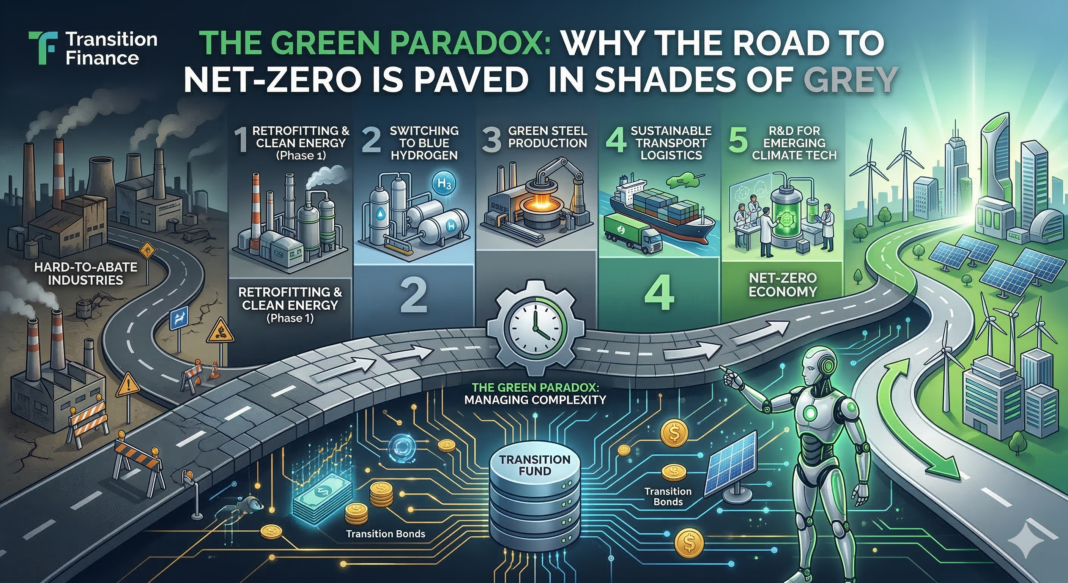

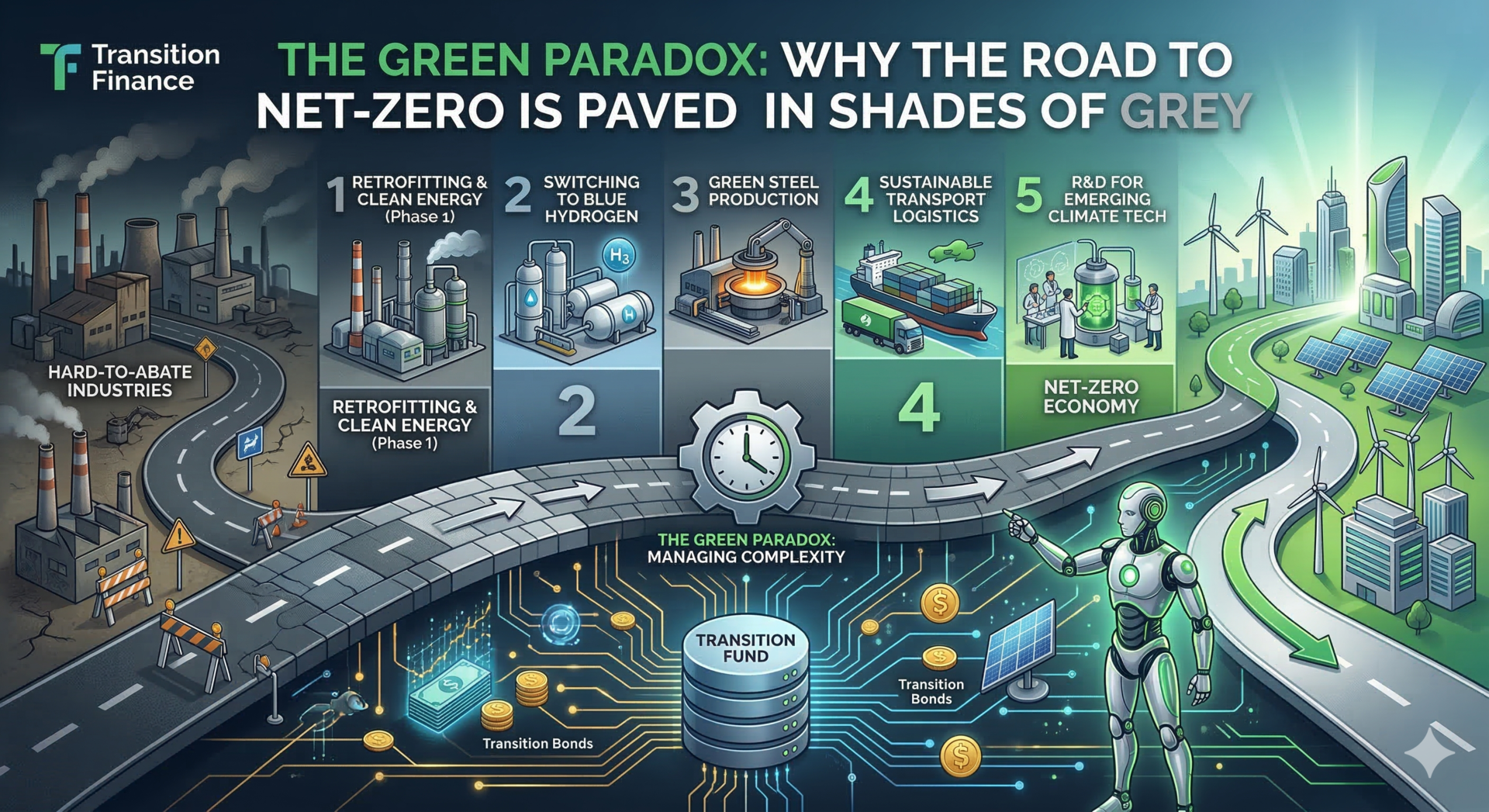
Transition finance helps high-emission industries pay for a credible shift towards cleaner operations. It matters most in sectors such as steel, cement, shipping, and chemicals. These industries cannot remove all emissions with today’s simple green options.
However, the label can also hide weak plans. A loan or bond may fund a small upgrade while the company keeps expanding fossil fuel use. Therefore, investors need clear targets, firm timelines, and honest reports.
What is transition finance?
Transition finance funds a company or activity moving towards low emissions. It can include loans, bonds, equity, guarantees, and public support. Unlike a pure green project, the starting point may still involve heavy pollution.
The key issue is direction. The finance should support a plan that fits climate goals and cuts real emissions. In short, it pays for change rather than rewarding the current state.
Why hard-to-abate industries need it
Some sectors need very high heat, dense fuels, or carbon-based raw materials. For example, cement releases carbon during its chemical process. Long-distance ships also need fuels that store a great deal of energy.
Many cleaner options remain costly or scarce. As a result, firms need money for pilots, new equipment, fuel supply, and supporting networks. Standard green bonds may not cover every step in that shift.
What transition finance can fund
- low-carbon steel made with clean hydrogen;
- lower-clinker cement and carbon capture;
- clean fuels and efficient ships;
- electric heat and energy-saving equipment;
- methane cuts and better leak checks; and
- worker training for new plants and systems.
Still, not every upgrade deserves the label. A project should deliver a large cut and avoid locking in dirty assets. It should also fit the company’s full transition plan.
How transition finance works
Use-of-proceeds funding
Some bonds and loans direct money to named projects. The issuer sets clear rules before raising funds. After that, it tracks spending and reports the results.
Sustainability-linked funding
Other deals can fund general business needs. In return, the borrower agrees to meet climate targets. The interest rate may rise if the company misses those goals.
Public and blended finance
New technology can seem too risky for private lenders. Public guarantees or low-cost loans may help. As a result, a project can attract more capital and move beyond the test stage.
Four tests for credible transition finance
1. A science-based pathway
The issuer should show how its targets match a recognised pathway. Both near-term and long-term goals matter. Otherwise, a distant net-zero pledge can delay action today.
2. Real capital spending
The budget should support the promised change. Investors should compare planned spending with the cost of the full transition. A tiny green budget cannot support a large climate claim.
3. No harmful lock-in
Assets can operate for decades. Therefore, each project should avoid extending high emissions beyond the target date. Firms should also explain how they will retire or replace old plants.
4. Clear and frequent reports
Good reports cover spending, emissions, and progress against targets. They also explain delays and changes. Independent checks add trust, especially when results affect the cost of a loan.
Guidance for issuers and investors
The ICMA Climate Transition Finance Handbook sets common expectations for plans and disclosures. Its guidance focuses on the issuer’s full climate strategy, not only one labelled deal.
This wider view matters. A company may issue a credible bond yet follow a weak business plan. Investors should test governance, targets, spending, and the role of the financed project.
The risk of transition washing
Transition washing happens when the claim is stronger than the change. It may involve easy targets, distant dates, or selective data. Meanwhile, the issuer may leave major emissions outside the plan.
To reduce this risk, investors should ask who set the target and what happens if it is missed. They should also compare the deal with the issuer’s lobbying, asset plans, and total emissions.
Why emerging markets matter
Many new industrial plants will serve fast-growing economies. Yet these markets often face high borrowing costs. That problem adds to the climate finance gap.
Well-designed public support can reduce risk and lower costs. However, deals should protect workers and communities too. A fair transition needs new jobs, useful skills, and access to clean services.
The bottom line
Transition finance can help heavy industry make changes that green projects alone cannot fund. Yet the label is only credible when the whole company is moving in the same direction.
Investors should look for a strong pathway, real spending, short-term targets, and open reports. When those pieces align, transition finance can turn climate promises into industrial change.




[…] Transition Finance: How Credible Deals Work […]
[…] Transition Finance: How Credible Deals Work […]